💡 Beginner's Guide

Best Beginner Piano Keyboards 2026

We tested 12 beginner keyboards under $400. These 6 stand out for build quality, key feel, and learning features. No fluff—just honest recommendations for your first piano.

✓ Updated January 2026
🎹 6 keyboards reviewed
💰 $200–$400 price range
Top Picks Buying Guide Compare Models
Tested & Reviewed

6 Best Beginner Keyboards

Each keyboard was tested for at least 2 weeks. We evaluated key feel, sound quality, build, features, and value. Here's what we recommend.
#1
Best Overall
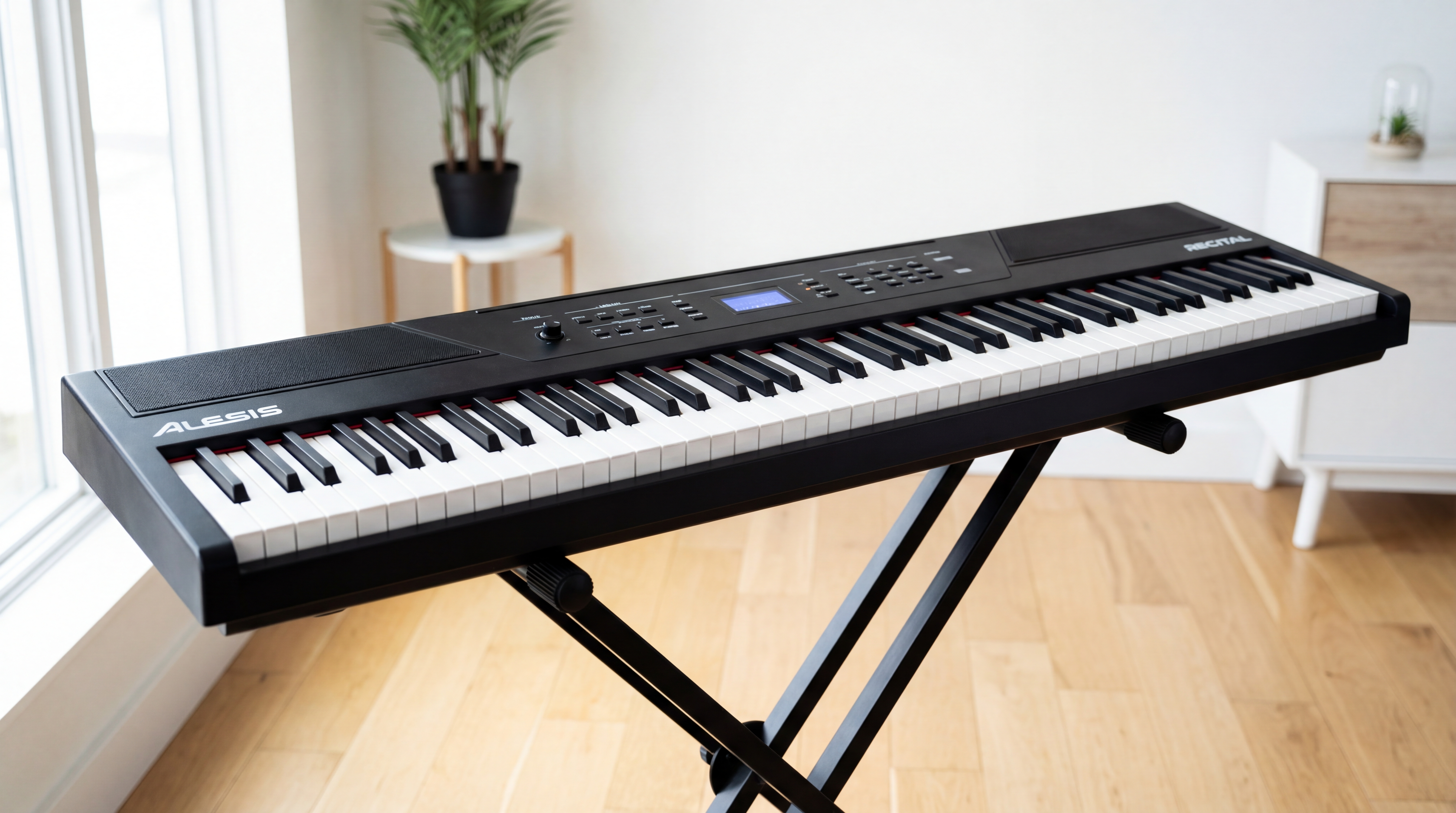
Alesis Recital

Alesis Recital

★★★★½ 4.5/5 (1,200+ verified buyers)
Our Verdict

The best bang-for-buck keyboard under $250. Nothing else at this price offers 88 semi-weighted keys that feel this good, plus solid speakers and built-in lessons.

The Alesis Recital punches way above its weight. The semi-weighted keys have adjustable touch sensitivity—rare at this price—and the 20W speakers deliver surprisingly full sound. Perfect for absolute beginners who want room to grow without breaking the bank.
Keys
88 Semi-Weighted
Sounds
5 Premium Voices
Speakers
20W Stereo
Best For
Absolute Beginners
#2
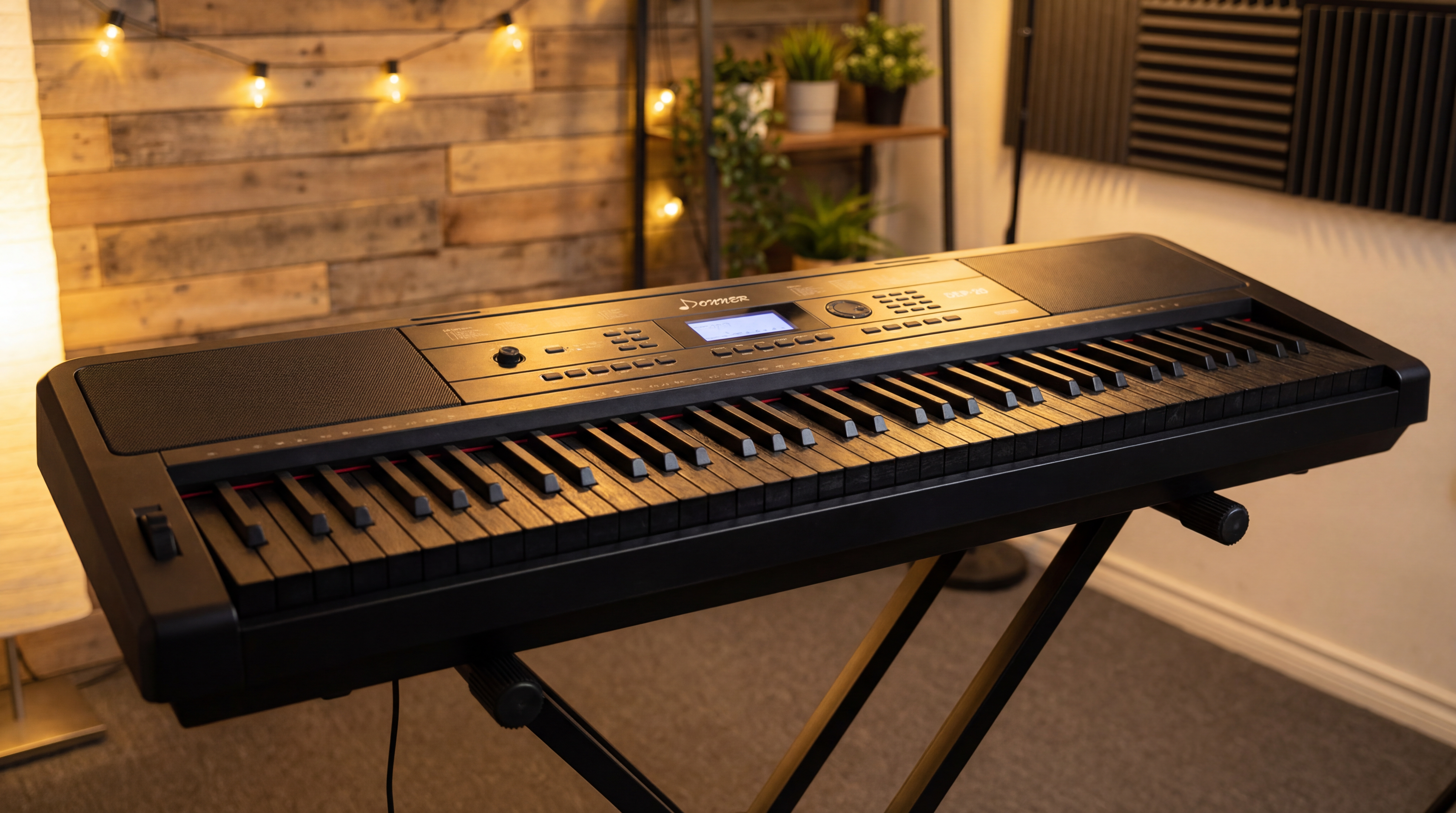
Donner DEP-20

Donner DEP-20

★★★★☆ 4.4/5 (890+ verified buyers)
Our Verdict

Best for explorers who want variety. 238 tones means you can experiment with organs, synths, and strings—great for creative beginners.

The DEP-20 is perfect if you want to explore beyond just piano sounds. With 238 tones and 128 rhythms, it's basically a mini workstation. The keys feel decent (though not quite Alesis-level), and the record function lets you track your progress.

Keys
88 Semi-Weighted
Sounds
238 Tones
Rhythms
128 Styles
Best For
Explorers & Composers
#3
Most Portable
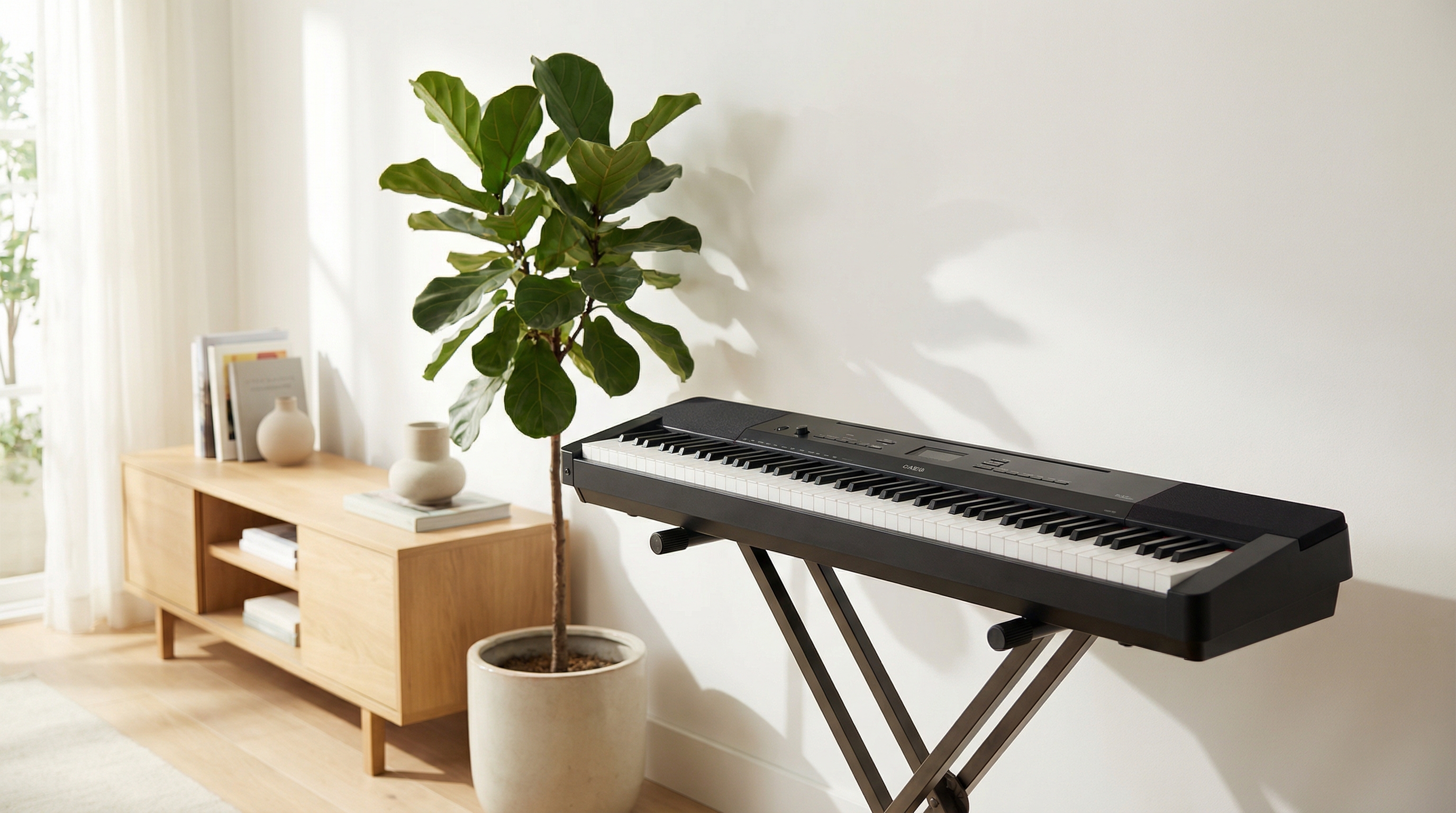
Casio CDP-S150

Casio CDP-S150

★★★★☆ 4.4/5 (750+ verified buyers)
Our Verdict

Insanely portable without sacrificing quality. At just 23 lbs and 9.2" deep, it's perfect for apartments or moving between rooms—and it sounds great.

Casio's ultra-slim design is a marvel of engineering. The Scaled Hammer Action feels better than semi-weighted keys (actual hammer mechanism), and Casio's piano sound is among the best in this class. Choose this if portability matters or you're tight on space.

Keys
Scaled Hammer Action
Weight
Only 23.1 lbs
Depth
9.2" Ultra-Slim
Best For
Small Spaces
#4
Alesis Recital Pro

Alesis Recital Pro

★★★★½ 4.6/5 (680+ verified buyers)
Our Verdict

The Recital's older sibling with better keys. Upgrade to hammer-action keys and more voices for $120—worth it if you're serious about technique.

Think of this as the Recital Plus. You get actual hammer-action keys (closer to acoustic piano feel), 12 voices instead of 5, and 128-note polyphony for playing complex pieces. If you can stretch your budget, this is the better long-term investment.

Keys
Hammer Action
Polyphony
128 Notes
Voices
12 Premium
Best For
Serious Beginners
#5
Brand Name
Yamaha P-45

Yamaha P-45

★★★★★ 4.7/5 (1,500+ verified buyers)
Our Verdict

Yamaha quality at an entry price. The cheapest way into the Yamaha ecosystem—legendary build quality and the GHS action that thousands trust.

This is Yamaha's most affordable digital piano, and it shows their decades of expertise. The GHS (Graded Hammer Standard) action is heavier in bass and lighter in treble, just like an acoustic. Sound quality is classic Yamaha—balanced and reliable.
Keys
GHS Weighted
Sound
AWM Sampling
Voices
10 Sounds
Best For
Brand Loyalists
#6
Casio Privia PX-160

Casio Privia PX-160

★★★★☆ 4.5/5 (920+ verified buyers)
Our Verdict

Best key action under $400, period. The Tri-Sensor mechanism rivals keyboards costing twice as much. Choose this for the most authentic feel.

Casio's Privia line is known for excellent key actions, and the PX-160 doesn't disappoint. The Tri-Sensor Scaled Hammer Action II tracks your playing with precision, and the simulated ebony/ivory keys prevent slipping. This is the most "acoustic-like" feel you'll find under $400.

Keys
Tri-Sensor Hammer II
Polyphony
128 Notes
Voices
18 Tones
Best For
Key Feel Priority
Side-by-Side

Quick Comparison Table

Compare all 6 keyboards at a glance

Model Price Key Type Voices Best For Our Rating
Alesis Recital $229 Semi-weighted 5 Best overall value ★★★★½
Donner DEP-20 $319 Semi-weighted 238 Sound variety ★★★★☆
Casio CDP-S150 $399 Scaled Hammer 10 Portability ★★★★☆
Alesis Recital Pro $349 Hammer-action 12 Room to grow ★★★★½
Yamaha P-45 $379 GHS Weighted 10 Brand reliability ★★★★★
Casio PX-160 $399 Tri-Sensor Hammer 18 Best key feel ★★★★☆

Beginner Keyboard Buying Guide

What to know before spending your money—written for real people, not spec nerds.

Do I Really Need 88 Keys?

Yes, if you're learning piano seriously. 61 or 76-key keyboards might look appealing (they're cheaper and more portable), but they limit what pieces you can play as you progress. Every keyboard we recommend has a full 88-key layout because that's what you need to play real piano repertoire.

Think of it like learning guitar on a 3/4-size instrument—it works for a while, then you have to relearn on a full-size. Save yourself the hassle.

Weighted vs. Semi-Weighted Keys: What's the Difference?

  • Semi-Weighted Keys: Springs provide resistance. Lighter touch, easier for complete beginners, but doesn't build proper finger strength. Good for ages 5-10 or ultra-casual learners.
  • Weighted/Hammer Action: Actual hammers (like acoustic pianos) provide resistance. Heavier touch that builds finger independence and technique. Choose this if you're serious or want to transition to acoustic piano someday.

Our take: If you can afford weighted keys ($350+), get them. If budget is tight, semi-weighted is fine—but plan to upgrade within 2-3 years.

How Much Should I Actually Spend?

Here's the honest breakdown:

  • Under $200: Avoid. You're sacrificing key quality, sound, or both. Better to save another month.
  • $200-$300: Sweet spot for beginners. Alesis Recital dominates here—nothing else comes close for value.
  • $300-$400: You get weighted keys, better sounds, and more features. Worth it if you're committed or buying for a teenager/adult.
  • Over $400: You're entering intermediate territory. See our intermediate guide instead.

What About Accessories?

Budget an extra $100-$200 for essentials:

  • Stand: X-style ($30-50) or furniture-style ($80-150). Don't play on a dining table—wrong height kills your posture.
  • Bench: Adjustable height is mandatory ($50-100). Kitchen chairs don't cut it for proper technique.
  • Headphones: For quiet practice. Over-ear, closed-back work best ($30-80).
  • Sustain Pedal: Most keyboards include one. If not, budget $15-30.

Do I Need Bluetooth or MIDI?

MIDI (via USB): Lets you connect to learning apps like Simply Piano, Flowkey, or recording software. Super useful—make sure your keyboard has it.

Bluetooth: Nice to have but not essential at beginner level. It allows wireless connection to apps and playing backing tracks through the piano speakers.

Bottom line: USB-MIDI is a must. Bluetooth is a bonus.